Spherical plain bearings, also known as joint bearings, are essential mechanical components designed to accommodate angular misalignment and support loads in applications involving oscillating, pivoting, or slow rotational movements. Their spherical sliding surfaces allow relative movement between connected components while helping maintain stable load transmission.
Compared with conventional rolling bearings, spherical plain bearings are particularly suitable for applications where angular movement, alignment compensation, compact construction, and high load-carrying capability are important. Depending on their design and sliding material, they can be selected for applications requiring regular lubrication or maintenance-free operation.
Today, spherical plain bearings and rod ends are widely used in industrial machinery, automation equipment, robotics, construction machinery, agricultural equipment, and renewable energy systems.
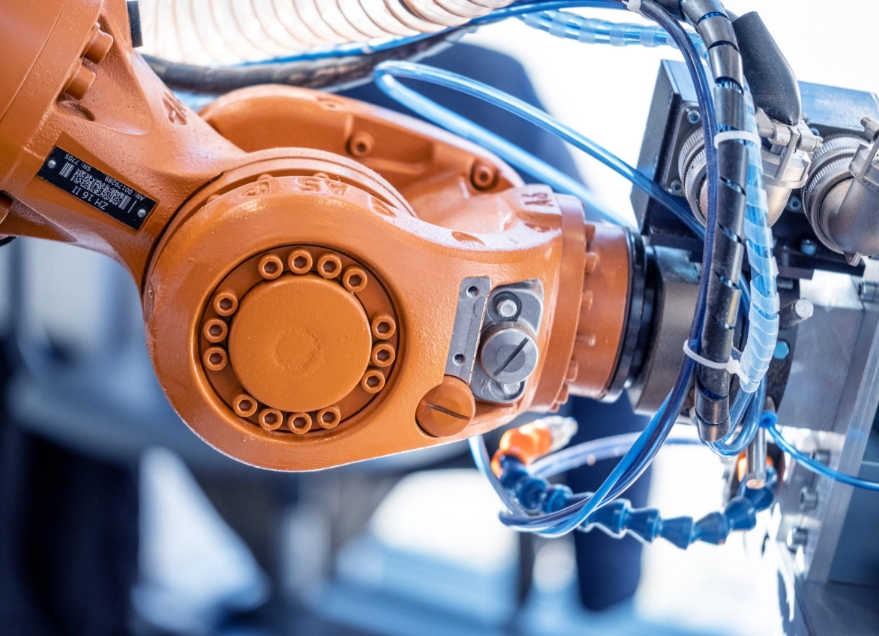
As robotics and industrial automation continue to develop, reliable motion transmission and precise mechanical positioning have become increasingly important. Spherical plain bearings and rod ends can provide flexible connections in robotic mechanisms where angular movement and alignment compensation are required.
In selected robotic linkage systems, spherical plain bearings help connect moving components and accommodate angular changes during operation. They can be used in auxiliary linkages, articulated mechanisms, positioning equipment, and other joints designed around spherical sliding motion.
Rod ends are particularly useful when a compact bearing is required at the end of a connecting rod. Their integrated threaded shank and spherical bearing head make installation and adjustment convenient in suitable mechanical linkages.
Automated production lines often contain actuators, connecting rods, positioning mechanisms, and moving fixtures. Spherical plain bearings can accommodate small alignment deviations between connected parts, helping reduce the effects of mounting misalignment and supporting smooth movement.
Depending on the application, suitable bearing designs can help maintain reliable operation under repeated oscillating motion and changing loads.
Accommodate angular misalignment in mechanical linkages.
Support oscillating and pivoting movements.
Provide compact connection solutions for selected mechanisms.
Offer different designs for lubricated or maintenance-free applications.
Help improve the reliability of moving components when correctly selected and installed.
The appropriate bearing type depends on the robot's load, motion range, required precision, friction characteristics, operating environment, and service-life requirements. High-precision robot joints may require specialized bearing solutions rather than standard spherical plain bearings.

Solar energy systems are increasingly using tracking mechanisms to adjust the orientation of photovoltaic panels or reflectors. These systems require mechanical components that can withstand outdoor conditions and support controlled movement over long operating periods.
Spherical plain bearings can be considered for selected pivot points, connecting links, actuator connections, and support mechanisms in solar tracking equipment.
Solar trackers move photovoltaic panels to follow the sun's position. Their mechanical structures may include rotating shafts, support frames, adjustment links, and actuator-driven connections.
Where the design requires angular movement or compensation for alignment deviations, spherical plain bearings or suitable spherical bearing units can provide a practical connection solution. Rod ends can also be used in actuator linkages where the installation geometry requires a flexible joint.
Solar tracking equipment may be exposed to dust, rain, temperature fluctuations, wind loads, and long periods of outdoor operation. Bearing selection should therefore consider not only the load and movement but also corrosion protection, sealing, lubrication requirements, and maintenance accessibility.
Depending on the operating conditions, engineers may choose steel-on-steel bearings that require lubrication or maintenance-free designs with suitable sliding materials. These options have different performance characteristics and should be selected according to the actual application.
Accommodate angular movement in tracking mechanisms.
Help compensate for installation and alignment deviations.
Support pivoting connections and actuator linkages.
Provide bearing options for different load and environmental requirements.
Help support reliable operation when matched to the system's design and maintenance plan.
Important: Not every solar tracking system uses spherical plain bearings. The appropriate bearing solution must be determined by the tracker structure, load cases, movement requirements, environmental exposure, and service-life targets.
Construction and agricultural machinery frequently operate under heavy loads, vibration, shock, and changing working conditions. Spherical plain bearings and rod ends are used in selected mechanical connections where angular movement and load transmission are required.
Typical applications may include hydraulic cylinder connections, steering linkages, lifting mechanisms, suspension linkages, and articulated joints in equipment such as excavators, loaders, tractors, and agricultural implements.
Their ability to accommodate angular misalignment can help connected components move as intended without requiring perfect alignment throughout the entire operating cycle.
Bearing selection should take account of static and dynamic loads, oscillation frequency, lubrication access, contamination, corrosion, and the risk of impact loading.
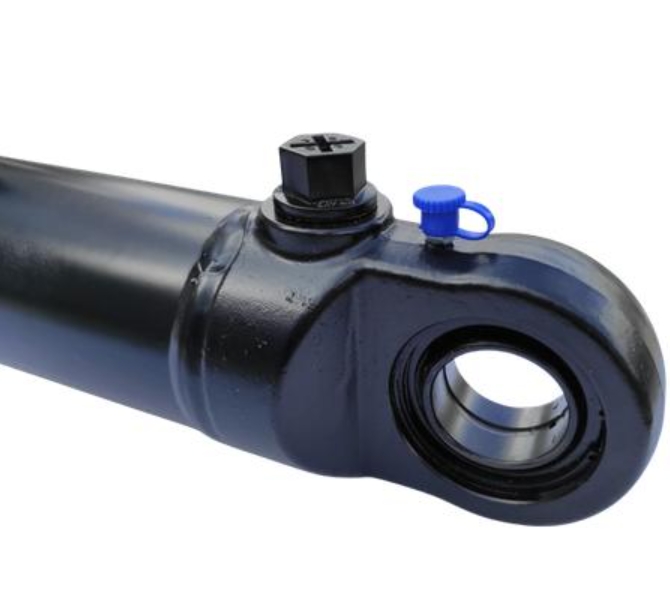
Hydraulic and pneumatic systems use cylinders and actuators to generate linear movement and force. Spherical plain bearings and rod ends can connect cylinder ends to machine structures or moving components.
These flexible connections help accommodate angular changes as the actuator extends and retracts. They can also reduce the effects of minor alignment deviations between the cylinder and the connected mechanism.
Typical applications include hydraulic cylinders, pneumatic actuators, industrial lifting equipment, material-handling systems, and mechanical positioning devices.
For demanding applications, engineers should carefully evaluate bearing loads, permissible misalignment, lubrication, sealing, and the compatibility of the bearing design with the actuator's movement and mounting arrangement.
Spherical plain bearings and rod ends are also used in industrial machinery where rotating, swiveling, or oscillating movements occur under load.
Examples include conveyor equipment, lifting systems, packaging machinery, mechanical linkages, and other motion-transmission assemblies.
In these applications, spherical plain bearings can provide flexible connections and accommodate angular movement. The correct bearing design helps balance load capacity, wear resistance, lubrication needs, and operating reliability.
Choosing the right spherical plain bearing requires more than matching the bore and outside diameter. The following factors should be considered:
Load requirements: Determine the radial and axial loads, including shock loads where applicable.
Movement type: Identify whether the bearing will operate with oscillating, pivoting, or rotational movement.
Misalignment: Confirm the required angular movement and the bearing's permissible misalignment.
Sliding contact materials: Choose a suitable steel-on-steel, steel-on-bronze, or maintenance-free sliding design according to the operating conditions.
Lubrication and maintenance: Confirm whether regular relubrication is possible and whether a maintenance-free design is required.
Environmental conditions: Consider dust, moisture, corrosion, temperature, and sealing requirements.
Installation and service life: Check the mounting arrangement, housing design, operating cycle, and expected service life.
Correct bearing selection and installation are essential for reliable performance. The final choice should always be verified against the manufacturer's technical data and the actual application requirements.
At Zhangzhou SPB Bearings Corporation Limited, we specialize in spherical plain bearings and related products for a wide range of industrial applications.
We understand that different industries have different requirements for load capacity, movement, lubrication, installation, and operating environments. Our product range supports various mechanical connection needs, and we aim to help customers identify suitable bearing solutions for their applications.
Whether you are developing industrial machinery, automation equipment, hydraulic systems, or selected solar tracking mechanisms, our team can assist with product selection based on your technical requirements.
Contact SPB Bearings for product information, technical drawings, and quotations. We look forward to supporting your spherical plain bearing requirements.
Zhangzhou SPB Bearings Corporation Limited is a specialized manufacturer dedicated to the development and production of spherical plain bearings and related bearing products. With over 20 years of experience in spherical plain bearing technology and manufacturing, we serve customers across a wide range of industrial sectors with dependable products and application-oriented solutions.....[ Read More >>]


